
Table of Contents
▼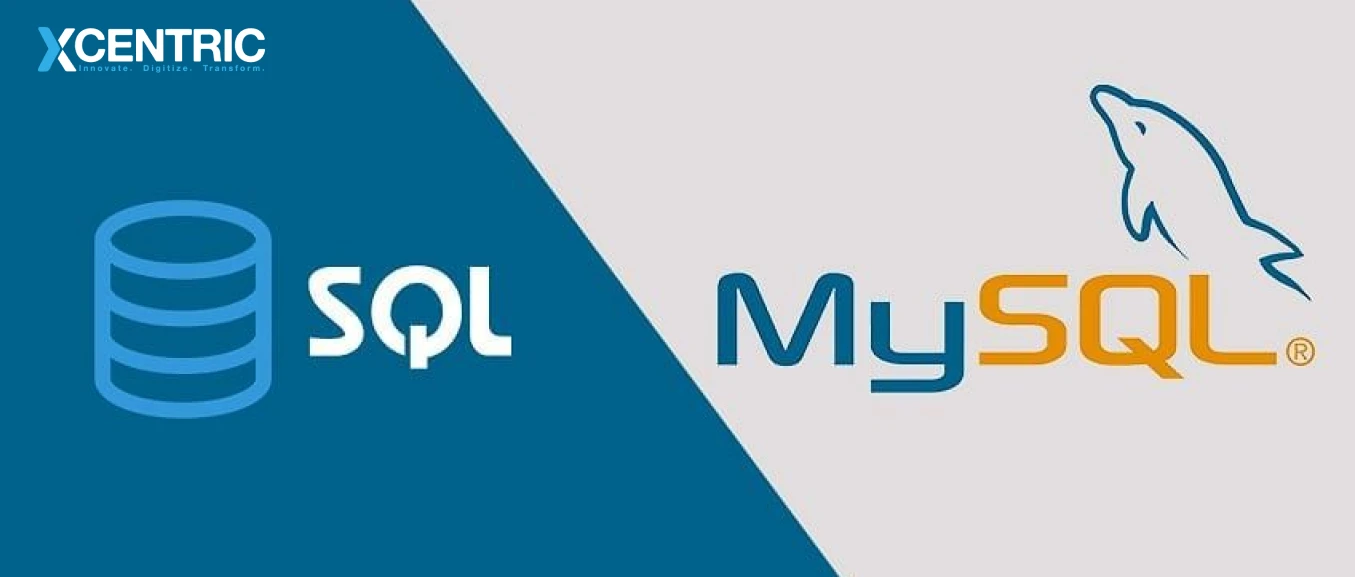
No, SQL and MySQL are not the same thing. SQL (Structured Query Language) is a standard computer language that can be used in a variety of relational databases. MySQL is a particular relational database management system (RDBMS), or software program, which utilizes SQL as its query language. SQL is also used by other database systems, such as PostgreSQL, Microsoft SQL Server, Oracle Database, SQLite, and MariaDB. To sum up: SQL is a language, and MySQL is software that runs the language.
What Is SQL?
SQL is a Structured Query Language. It is the common language to access relational databases and carry out common data operations like fetching, updating, deleting, and inserting data.
An SQL statement, for instance, could be written as:
SELECT name, email
FROM customers
WHERE country = 'Pakistan';
There is one important thing to remember: SQL is not a database product. The download of "SQL" is not like the download of MySQL. SQL is a language and a family of standardized specifications which are implemented by database systems.
Some common uses of SQL include:
Recalling data in relational tables
Defining and changing databases
Adding, editing and removing data
Relations are associations between tables
Managing permissions and database objects
Working with transactions and other database operations
SQL is not implemented in exactly the same way as anywhere, though. Various relational database management systems have a common SQL core and each have their own dialects, extensions, functions, syntax, and behaviors.
What Is MySQL?
MySQL is an RDBMS (relational database management system). It is a program designed to store, organize, manage and retrieve structured data.
For instance, storing customer accounts, products, orders, invoices, blog posts, or application settings would be a common task for a web application like MySQL. The developers then make use of the SQL statements in order to communicate with the stored information.
For example, an application could send an SQL query to MySQL:
SELECT *
FROM orders
WHERE customer_id = 125;
MySQL executes the SQL statement, retrieves the data that is required, and returns the data to the application. It is an open-source relational database that was started by the MySQL AB and purchased by Sun Microsystems in 2008. In 2010 Oracle acquired Sun Microsystems, and became the proprietor of MySQL.
MySQL is still a popular database management system that is used in web based applications, content management systems, business applications, APIs, and custom applications. It isn't meant to be a substitute for SQL. Rather, it offers a place for developers to manipulate data using SQL.
There's another database product in the same larger realm: MariaDB is an independent, SQL-supporting MySQL fork.
SQL vs MySQL: What's the Difference?
The best way to get a grasp on the difference between SQL and MySQL is to not consider them competing technologies.
They are not the usual alternatives. You would not select "SQL instead of MySQL", as SQL is the language that you use to communicate with a relational database, and MySQL is just one specific database product that can execute SQL.
This is important when developers decide to port their application between different database platforms. A SQL statement that works correctly with MySQL might need to be modified before it will run with PostgreSQL or Microsoft SQL Server.
That's also why you're not asking the right question when you ask about SQL vs MySQL, as they are two different types.
Attribute | SQL | MySQL |
What is it? | Query Language (QL) | Relational database management system (RDBMS) |
Type | Language/standard | Software product |
Main purpose | Communicate with relational databases | Store, manage, and retrieve data |
Used by | Many relational database systems | MySQL itself |
Indepdence | Cannot exist independently | Can be an independent product |
Used with Other Databases | Yes | MySQL is itself a database system |
Owned by | N/A | Oracle |
Hence, if someone states they are "learning SQL", they are learning a database language. They are using a specific database system which interprets SQL.
There is a major practical difference as well. Once a developer knows how to write SQL, he or she can use those skills in any of the relational database platforms. The syntax and features are subject to change, but the basic concepts of tables, rows, columns, primary keys, joins, indexes, filtering, grouping and transactions are very relevant.
MySQL has its own implementation details, tools, configuration, storage engines, connectors, security features, and operational considerations, however.
This is why sql mysql difference searches are quite often not really asking "which one wins?" questions, but rather asking a category question. It is a very simple answer:
The language used is SQL. That language is used in a database product called MySQL.
Can You Use SQL Without MySQL?
This is one of the most crucial aspects that lies in the understanding of the difference between SQL and MySQL. There are numerous relational database systems that use SQL. MySQL is just one of them. For instance, SQL can be used with:
Database system | Uses SQL? | What it is |
MySQL | Yes | Relational database system |
PostgreSQL | Yes | Relational/object-relational database |
Microsoft SQL Server | Yes | Relational database system |
Oracle Database | Yes | Enterprise relational database system |
SQLite | Yes | Embedded relational database system |
MariaDB | Yes | Relational database system and MySQL fork |
The syntax of SQL is common to these systems and is helpful but it isn't fully compatible. Each platform uses its own SQL dialect, implementation options, extensions, functions and restrictions.
For instance, if you run a query in MySQL that would not run in PostgreSQL, you will need to modify it. So, a database migration isn't just about copying SQL statements from one system to another.
For enterprises developing new applications, it is critical since the selection of a database is an architecture decision. The best choice may be influenced by the data model of the application, traffic volume, host environment, integration, reporting, security, development stack and scalability. If you're comparing database technologies at that high-level, it's more about database types and database architecture than SQL vs MySQL.
For companies that are not certain about the database technology to include in the new website, application, API, or customized software, collaborating with a seasoned development team can also save them from the price of architectural changes later. Instead of the database being a standalone technical decision, Xcentric Services can help businesses determine how to use it with their application, identify the right architecture and create the digital solution around it.
SQL vs MySQL: Why Does the Confusion Happen?
The terms become confused when people casually use "SQL" as though it were the name of a particular database product. With the common vernacular of development discussions, the term "SQL database" may be interpreted as a relational database, and the term SQL may be interpreted as "the language of relational databases.
That is why you might be interested in reading the answers to questions like is SQL and MySQL the same, is MySQL the same as SQL, and what is the difference between SQL and MySQL and come to essentially the same understanding.
The relationship can be summarized in the following order:
SQL is the language
MySQL is one implementation
PostgreSQL, SQL Server, Oracle Database, SQLite, MariaDB, and others are other implementations
Why the SQL vs MySQL Difference Matters for Web Development
It's not just a matter of semantics, but understanding the difference. Modern sites and applications typically have a back-end database. An ecommerce website can have to deal with products, clients, stock, payments and orders. A business portal can contain employee information, reports, documents and permissions. An API can require ongoing read and write access to database records, which can be a problem for a custom app.
In both, SQL might be included in the application-development cycle, and the platform used for the database will decide where and how the queries are applied and how the data in the underlying database is stored and managed.
The typical architecture can be as follows:
Application layer | Examples of responsibility |
Front end | Shows information to users |
Back end | Handles business rules and requests |
API | Connects application components |
SQL | A language for querying databases |
MySQL/PostgreSQL/etc | Stores and manages the data |
This is where the power of the database comes into play. It may be tempting to just use a database that you know, but that can cause issues down the road. As the application grows, it may need better indexing, optimized queries, better backup systems, stronger security systems, replication, scale-up solutions or even a different model of the application.
A professional development agency like Xcentric Services can take a comprehensive look at the database as a part of the overall digital architecture. Rather than choosing a database for its own merits, the team can think about its compatibility with the website, the application, the technology that goes behind it, the hosting infrastructure, APIs and integrations, performance needs and future expansion.
That's the wider mindset a company looking to invest in custom software can use to cut down on technical debt and make future development more predictable.
Who Owns MySQL?
Oracle is currently the steward of MySQL. The history is quite simple: In 2008, Sun Microsystems bought MySQL AB and in 2010 Oracle bought Sun Microsystems, placing MySQL under the umbrella of Oracle and its stewardship. The relationship between the governance and the community of MySQL with Oracle has also been a hot topic in 2026, with Oracle announcing changes to better engage the community and community members pushing for more firm commitments from Oracle's governance.
This "ownership" issue does not affect most developers who are attempting to learn the difference between SQL and MySQL, however: SQL is a language, and MySQL is a particular relational database product.
SQL vs SQL Server: What's the Difference?
It's not an SQL vs MySQL distinction.
SQL: Query Language
SQL Server: is a relation database management system from Microsoft.
In other words, SQL Server is another database product using SQL, and MySQL is yet another database product using SQL.
Term | Meaning |
SQL | Query language |
MySQL | Database product |
SQL Server | Microsoft's database product |
When the actual question is what is better, SQL Server or MySQL for a specific application, it's a real product-to-product comparison with architecture, hosting, licensing, performance, tooling, ecosystem and business requirements. It should be contrasted with the simple SQL vs MySQL explanation.
When Should a Business Use MySQL?
No single database is best for all projects. When an application demands a well-established relational database, data needs to be structured, a wide range of developers to choose from and the ability to integrate with a traditional web-development stack, MySQL may be a viable option. But the right option should be selected based on the application requirements and not popular.
For instance, the business that wants to create a customer portal will require relational tables for users, accounts, transactions, permissions, and activities. There can be correlations between customers, products, inventory, orders, shipping, and payments in an ecommerce platform. The database should meet those requirements and be a part of the technical architecture.
That's why a development consultation should start with questions like:
Business requirement | Technical consideration |
75 users | 75 users |
Amount of data | Storage and indexing strategy |
Application Type | Architecture of suitable database |
Integrations | API and connector compatibility |
Security | Authentication, authorization, backups. |
Reporting | Query & Analytics needs |
If you are thinking about a new website, web application, customer portal, or a new custom business system, Xcentric Services can assist you in determining the proper technical architecture that meets your business needs. The choice of database is then a part of the bigger solution, rather than a standalone decision.
Is MySQL Free?
MySQL is available as an open-source software under the GNU General Public License (GPL) and Oracle also provides commercial licensing for MySQL. The software is currently dual licensed, with the choice of using it under GPL (as an open source license) or buying an Oracle-supplied commercial license.
There are commercial editions with extra features and support, and Oracle offers commercial products such as MySQL Standard Edition, Enterprise Edition and Cluster Carrier Grade Edition.
In the case of a commercial application, the exact situation for licensing can vary, depending on how MySQL is being used and distributed, so businesses should check the specific license terms, and not assume that all commercial uses of MySQL are license-free due to the term "open source.
The Bottom Line: SQL vs MySQL
The SQL vs MySQL debate is simple because these are not mutually exclusive storage options. SQL is a language. MySQL: MySQL is a database product that provides implementation of that language. No need to learn MySQL before you learn SQL. SQL can also be used with relational database software such as PostgreSQL, SQL Server, Oracle Database, SQLite, MariaDB and others.
When investigating databases for your upcoming website, ecommerce platform, business app, API, customer portal or custom software project, it shouldn't just be "SQL or MySQL? It should be what's the best database architecture for the application and business requirements?
Here's where professional technical expertise can come in handy. The database, backend, APIs, host, security, and future scalability can all be viewed as part of a single system, allowing businesses to plan, design, build and optimize their digital products using the database.
A database decision is just one aspect of an organization transitioning from an idea or legacy system to a sustainable digital system The intent being to select technology that will work for the business now, and allow for future users, data, integrations, and growth.
Frequently Asked Questions
What is SQL and MySQL?
No. SQL is a standardised query language for databases and MySQL is a relational database management system that uses that query language. SQL is not limited to MySQL; it can be used by many other database products.
What's the difference between SQL and MySQL?
The easiest way to differentiate SQL and MySQL is that SQL is a language, while MySQL is software. SQL gives you the commands and syntax to manipulate relational data, and MySQL gives you the database system to store and manipulate that data.
Is it possible to use SQL without MySQL?
Yes. PostgreSQL, Microsoft SQL Server, Oracle Database, SQLite, MariaDB and other relational databases can be used with SQL. The SQL interpretation of each system can vary slightly.
What is the difference between MySQL and SQL Server?
MySQL and SQL Server are both relational database products that are written in SQL, but they are on different platforms and developed and maintained by different organizations. It's related to Oracle for MySQL and Microsoft for SQL Server. It is not the same as the simple SQL vs MySQL comparison question.
Is MySQL free?
MySQL is available under a GPL license, and also as a commercial license from Oracle. The open-source variation may or may not be suitable for a specific commercial product, depending on the way that the software is being used and distributed; please check the license with the specific project.

Share



Want To Increase Your Ranking On The Search Engines?
Get In Touch With Us!
Trending Blogs
Digital Marketing...
Xcentric Team
8 MONTHS AGO


What To Read Next?

For owners and managers of dental clinics in Lahore, here is a critical fact you...
Xcentric Team
8 MONTHS AGO

The Middle East e-commerce industry is rapidly growing due to increased digital acceptance, mobile-first consumers...
Xcentric Team
9 MONTHS AGO

These days, the e-commerce industry is growing at an exponential rate. With the rise of...
Xcentric Team
9 MONTHS AGO


