
Table of Contents
▼SEO for Small Businesses: How It Works, How Long It Takes and What to Expect
- Nov 19, 2026

As an owner of a small business, you have to face the competition to gain customers, handle your expenses and to find effective methods to gain leads. All three can be achieved with your website, but creating a website alone isn't enough for potential customers to find it. This is where SEO for small businesses comes in handy.
Seo makes it easier for people to find your business when they search Google for the products, services or solutions you offer. A well-thought-out SEO strategy can bring targeted traffic to your website and convert them into customers, regardless of your business model—whether you're a local service provider, an online retailer, a professional consultant or a growing brand.
SEO isn't, however, a fast fix. It demands keyword research, valuable content, technical enhancements, website optimization, and regular performance monitoring.
At Xcentric Services, we provide SEO, website development and creative design services to strengthen digital experiences for businesses. This guide details the process of SEO for small businesses, how long it will take to get results, what it will cost and when it is worth hiring professional assistance.
What Is Small Business SEO, and What Is the Difference Between Small Business SEO vs Local SEO?
SEO for small business is the marketing tactic that involves optimizing a small business website and online profile to show up higher in the results of search engines. It involves content optimization, technical SEO, keyword research, authority building and user experience improvements.
One aspect of this is known as local SEO, which involves targeting local customers who are looking for businesses in their specific vicinity. These strategies share some similarities, but have a slightly different focus.
Comparison | Small Business SEO | Local SEO |
Primary goal | To improve organic visibility in specified areas | To drive customers to specific geographical areas |
Target audience | Local, national or international customers | Customers in a defined service area |
Ranking surfaces | Organic Google Search results | Google Maps, local pack and organic results |
Main tactics | Content, keyword research, backlinks and technical SEO | Google Business Profile, reviews and local citations |
Example keyword | Affordable website design services | Website designer in Austin, TX |
For companies that operate in multiple cities, both are likely to be necessary.
The right strategy depends on your business model, customer location and revenue goals. A structured SEO audit and customised growth plan can help identify the right combination, helping to make your website more successful.
Why Does SEO Matter for a Small Business?

SEO is important because users often use search engines to find companies, compare and analyze them before buying.
BrightLocal's consumer search study finds that 84% of consumers conducted a local search online in the last three months. It also discovered that 75% of them search a variety of sites on their last trip to a local business.
This is the reason companies should rely on more than the presence of their website or social media page for establishing a trustworthy digital footprint. There are many advantages of SEO for a small business:
Sustained organic visits: Optimized pages can continue to bring traffic without a cost per click.
Relevant search intent: With improved quality leads, you're attracting individuals who are searching for products or services you offer.
Increased brand visibility and customer trust: Your brand will gain more visibility and trust in search results.
Long-term marketing value: It's content that can keep bringing traffic to your website after you publish it, and it's website pages that can.
Competitive advantage: Smaller businesses can outcompete by being specific about the services, problems that customers have, and niche keywords.
Unlike paid advertising, many times traffic will cease when you've spent all your advertising dollars, but with organic SEO, traffic can continue to flow.
But even with SEO, there is a need for constant investment in content, maintenance and optimisation. Should be looked at as a business development channel, not free traffic.
How Does SEO Work?

SEO creates value by assisting search engines to find, comprehend, and assess your website prior to showing relevant pages to users.
Google Search has three main steps: crawling, indexing, and ranking.
Stage | What Happens | Why It Matters |
Crawling | Googlebot discovers website pages and follows links | Search engines need to find your content |
Indexing | Google analyzes and stores eligible page information | Your content can become eligible to appear in search |
Ranking | Google's systems assess pages that match the query when they search for something | Decides what pages to show and which order to show them in |
Crawling: Websites are discovered by automated crawlers. Internal links, external links and XML sitemaps assist search engines in discovering key web pages.
Indexing: Once Google has found a page, it will analyze or process the content, images and other information on that page. It can use it to add the page to its search index. No guarantees of indexing are provided.
Ranking: Google's automatic systems compare the indexed pages that match the searched query with a variety of signals and return the most relevant ones.
That’s why SEO for small businesses goes far beyond the writing of keywords for web content. Your website needs to offer useful information, easy navigation, relevant content, and a favorable user experience.
Google's SEO Starter Guide describes these processes and offers official optimization suggestions.
How to Find the Keywords Your Customers Search
Knowing these keywords your customers are searching for is essential in any marketing campaign. Keyword research identifies the phrases potential customers enter into search engines when looking for products, services or information.
In SEO for small businesses, keyword research isn't about picking keywords that are just in high demand; it's about what your customer is looking for and wanting to buy.
A web design agency may start their list of seed keywords with:
Website design services
Affordable website development
Ecommerce website design
Small business website design
Website redesign company
Then break apart these phrases to create even longer-tail keywords that reflect more specific searches.
Examples include:
The cost of website design for small businesses is an affordable option
This is the best ecommerce website design company that provides an excellent service
A website redesign service for companies that are growing.Website redesign services for growing businesses
Another critical factor to consider is also search intent:
Informational: When someone is interested in learning more, like how to use SEO
Commercial: There is a comparison of services or a provider is being assessed
Transactional: Person is willing to buy or reach out to a business
Navigational: Someone is looking for a particular business or website
Google Keyword Planner, Google Search Console and Google Trends are some free and accessible research tools that will come in handy.
Google Search Console is particularly useful for discovering queries that already generate impressions for your website.
How to Build Pages and Content That Match Search Intent

SEO content that handles customer queries and leads them to the next step in the sales funnel.
A small business should establish pages that cater to the most important services that they offer, rather than attempting to rank one page for each keyword.
For instance, a digital agency can have various pages such as:
Search engine optimization
Local SEO
Ecommerce website development
Graphic design
The service should be explained on each page, along with its benefits, the issues that it resolves and how customers can get started.
Blog posts are for a different purpose. They draw in individuals wanting to find out answers, compare choices or seek solutions. A useful content strategy is to relate info blog posts to a relevant commercial service page via something called contextual internal linking.
Helpful content should demonstrate experience, expertise, authority and trustworthiness (E-E-A-T). Add real-life explanations, examples, new ideas and info about the business or the author(s). Don't publish many pages with very similar content with only minor variations in keywords.
Ecommerce SEO can also help businesses enhance product category pages, product descriptions and website structure for businesses that sell products online. In this course, you will learn the fundamental principles of on-page optimization, including titles, headings and internal links.
On-Page SEO Basics: Titles, Headings and Internal Links
On-page SEO is the process of optimizing elements of your website to make it easier for readers and search engines to understand what you're posting.
The key components are:
Title Tag: Create a page title that conveys the page content and includes the main keyword in the title in a natural, realistic way.
Meta description: Put together an enticing description that will draw the attention of the appropriate users.
Heading hierarchy: One of the major elements of this, and a feature that is still not common on most sites, is the use of header tags to structure the content of the site.
Image alt text: Describe meaningful images accurately to enhance accessibility and provide context: Image alt text.
Internal links: Link related pages together, so that users and search engines can easily navigate your website.
Schema markup: Use relevant structured data, such as LocalBusiness, where applicable.
Internal linking can be especially beneficial on sites that have numerous blog posts and commercial landing pages.
An organized website will help provide contextually relevant information across the site and can make key pages more easily found.
How to Find and Fix Technical SEO Issues
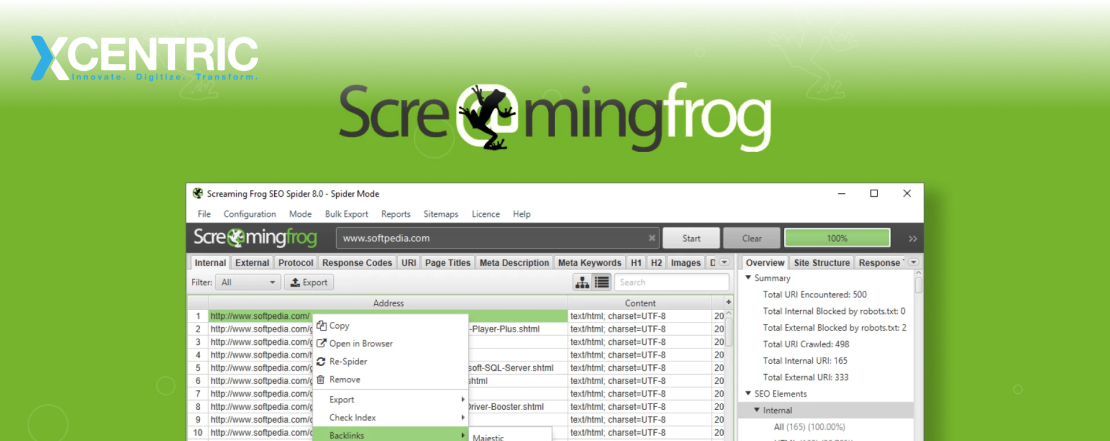
Technical SEO makes it easier for search engines to crawl your website and for users to navigate it. Even excellent content may struggle to perform if important pages are blocked, inaccessible or poorly structured.
Small businesses should regularly check the following:
Technical Element | What to Check | Recommended Action |
Important pages missing from Google | Import URLs to Google | Index pages (Google Search Console) |
Page load time | Slow loading, low responsiveness | Optimize images, scripts & hosting |
Core Web Vitals | Loading, interactivity and visual stability | Monitor Google's Core Web Vitals |
Mobile usability | Difficult navigation on smartphones | Use responsive website design |
HTTPS | Secure website connection | Install and maintain a valid SSL certificate |
XML sitemap | Important URLs missing | Submit an updated sitemap |
Google Search Console can help you recognize issues with indexing and check individual URLs to see how your website's performance is going. Also have to study broken links, redirect chains, duplicate pages and crawl accessibility.
A professional SEO audit will help you to discover these issues and prioritize them based on their impact. Even before investing in ongoing SEO optimization, you can find out what an SEO audit would reveal.
How to Set Up Google Business Profile, Citations and Reviews
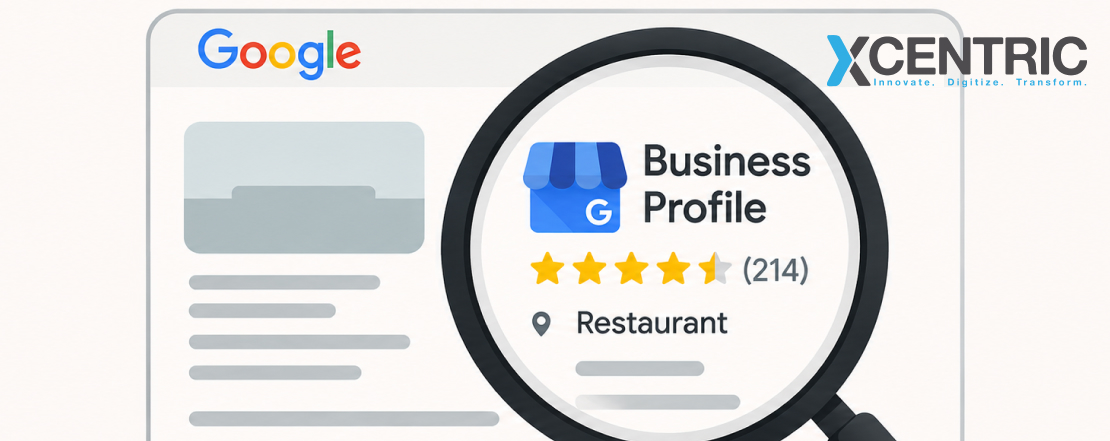
Google Business Profile is a crucial component of local SEO efforts, especially for businesses with a physical address in a particular area.
An optimized profile makes it easy for customers to locate a business, learn what services it offers, and reach out to the business.
Begin with these activities:
Claim and verify your Google Business Profile
Choose the most pertinent main business classification
Include accurate contact information, hours and services
Produce real photos of your business, products or finished projects
Ensure that your Name, Address and Phone (NAP) are the same in relevant directories
Ask for honest and sincere feedback from users; respond professionally to it
The sites can affect people's confidence in a business and can assist people in comparing competing businesses.
If your company caters to a particular city, then you should also create local landing pages and keep your listings correct in the directory. Our local search engine optimization (SEO) services can help build a more dominant local presence.
How to Earn Backlinks Without Buying Them
If you want to build backlinks without spending any money, here are the steps you need to take.
Backlinks are links that come from other websites to your website. They can convey signals of authority and relevance to search engines and aid their discovery of content. But not every backlink is of the same value.
Backlinks for small businesses can be created in a natural and organic way, using legitimate relationship-building and helpful resources.
Consider these strategies:
Build local partnerships: Work with other businesses and community groups that complement the work.
Suppliers and vendors: Get relevant partners to place your business in appropriate supplier/vendors directories.
Chambers of commerce: Be involved in local business associations and have valid membership lists.
Digital PR: Share original research, expert commentary and useful company news with relevant publications.
Industry directories: Find reputable directories that are used by industry competitors and customers.
Guest posts: Submit valuable, relevant posts to industry websites.
Don't buy backlinks or engage in link schemes. Search engines might ignore unnatural links or take some action against spam. Fewer, but more relevant and editorially acquired links are better valued than more links that are irrelevant.
How Long Does SEO Take for a Small Business?
Most of the time, it will take some time, or several months of regular SEO efforts, to see any positive results. The planning horizon is reasonable 6-12 months, but it depends on the competition, condition of the websites, quality of content, and resources.
According to Google, some will be noticeable in a few hours, and others will take months to impact search results.
Let's take a realistic example timeline:
Timeline | SEO Activities | What to Expect |
Months 0-3 | SEO audit, keyword research, technical fixes and page optimization | Improved website foundations and early indexing signals |
Months 3-6 | Content publishing, internal linking and backlink development | Increasing impressions, keyword visibility and early traffic boosts |
Months 6-8 | Content publishing, internal linking and backlink development | Better rankings and possibly more qualified leads |
Months 9-12 | Performance analysis, content updates and strategic expansion | More established organic visibility and opportunities for consistent conversions |
These are not ranking milestone commitments, just planning. There are a number of factors that will impact the timeline of SEO:
Competition: The difficulty of the competition for ‘highly competitive’ commercial terms is usually greater.
New website age: It could take a while for a newer website to be seen and have authority.
Technical health: Indexing issues and site structure may slow down progress.
Content quality: Pages with relevant and helpful content can better meet search intent.
Content consistency: A realistic and consistent content program increases chances to draw search traffic.
Backlink profile: Editorial mentions and links with relevance can boost the strength of your site's authority.
The most crucial thing is to look at multiple indicators and not rely on being on the first page of search results exclusively.
What Should a 12-Month SEO Roadmap Look Like?
When SEO becomes a series of actions that can be performed over the course of a year, a 12-month roadmap makes it manageable for small businesses.
This is an example of a first-year organization for a small business:
Quarter | Main Activities | Business Objective |
Q1: Foundation | Audit, keyword research, technical fixes and service-page optimization | Build a search-friendly website |
Q2: Growth | Publish useful content, optimize internal links and local listings | Increase visibility that is relevant |
Q3: Authority | Earn backlinks, update content and improve conversion paths | Build credibility and generate more leads |
Q4: Optimization | Optimize performance, build on successful topics, and optimize landing pages | Elevate organic conversions and get ready for the next growth cycle |
Your roadmap should match your available budget, competitiveness in your industry and your business goals.
For instance, an ecommerce company might focus on optimizing product categories, whereas a local service provider might focus more on optimizing their Google Business Profile, service-area pages and customer reviews.
If you have a partner who is an SEO professional, they can help you plan these activities into a quantifiable plan.
How to Track SEO Results and Know Whether Your Investment Is Working
Monitoring SEO outcomes assists local businesses know if their optimization initiatives are creating substantial modifications.
But the rankings should not be the sole basis for SEO campaign success. There are two key types of performance indicators.
Let's find out if you're improving your SEO visibility with these leading indicators:
Search impressions
Organic keyword rankings
Search clicks
Indexed pages
Organic traffic
Relevant referring domains
Lagging indicators reflect the outcomes of visibility, whether this is transforming into business results:
Contact form submissions
Qualified leads
Phone calls
Appointment bookings
Ecommerce transactions
Revenue from natural traffic
Google Search Console provides information about impressions, clicks, click-through rates and average search position.
Google Analytics 4 (GA4) is used to track user engagement, conversions and traffic sources.
Google Business Profile performance reporting also provides businesses with insights into interactions with their local listing. For instance, if your website is seeing an increase in impressions but no increase in enquiries, it could be due to weaker CTAs, service descriptions that aren't as clear or more landing pages that are not relevant to your services.
Beware of agencies that provide rankings without clarifying how their services are helping the business's performance.
What Is the SEO Budget for a Small Business, and Should You DIY or Hire an Agency?
The SEO budget for a small business varies according to the different service requirements and growth goals, the size of its website and the competition in the market.
An ideal first planning budget for an average monthly SEO program for US businesses is around $500-$2,500 per month. More competitive marketplaces, bigger websites and full campaigns can demand a much greater investment.
SEO Budget | Typical Scope | Suitable For |
$300 to $600/month | Basic optimization and free tools, DIY research | Very small businesses starting independently |
$1,000/month and above | Expert advice and specific enhancements | Small to medium-sized companies |
$2,500-$10,000/month | Full-time optimization, content and technical efforts | Small to medium-sized companies in competitive industries |
$5,000-$10,000+/month | More in-depth material, technical optimization, and authority building | Competitive industries, aggressive growth goals |
These are recommendations for planning bands and do not reflect industry rates. Quotes are subject to actual review, based on deliverables, provider experience and project needs.
Should you do SEO yourself?
DIY SEO can go with time management, as you have to learn how to conduct keyword research, produce good content, optimize website pages, and track them.
But with normal business activities, managing technical SEO, competitive analysis, content strategy and link building could become complex.
When should you hire an SEO agency?
When hiring professional assistance:
You have visitors to your site, but not many in the way of inquiries
Your service pages are always outranked
There are technical issues on your website that you're not able to fix
A well-thought-out content and optimization plan is essential
You would like to grow into other sites or markets
Be skeptical of providers who guarantee results within a short time, thousands of backlinks or first-page rankings
When you're considering an SEO contract, request a scope of work, reporting requirements, ownership and cancellation policies.
How Can Xcentric Services Help Your Small Business Grow Through SEO?
There are multiple moving parts to SEO: strategy, technical expertise, content creation and a website that converts visitors into customers. These digital capabilities come together in Xcentric Services to empower businesses to bolster their online presence.
Xcentric Services is a digital and design company, meaning we can incorporate search visibility into your website, user experience and conversion-focused design, in addition to keyword optimization.
We can work on the following:
SEO strategy: Keyword research, competitor and customer search intent.
Technical optimization: Identifying website problems that impact crawling, indexing and usability.
On-page optimization: Optimizing titles, headings, internal links and the content of service pages.
Content development: Writing relevant pages that draw in relevant traffic.
Local SEO: Website visibility and optimization for local business.
Design and development of websites: Design and build a responsive website to support customer enquiries and sales.
Performance monitoring: Measurement of visibility, traffic and conversion opportunities of search.
From a new business website launch to optimizing an existing site or building out more qualified leads, a unified SEO and digital strategy can help your marketing dollars go further.
Xcentric Services specializes in creating viable digital solutions based on business goals and not unrealistic ranking promises.
If you're looking for the next steps for your website, check out our SEO services for small businesses, and talk about a strategy that fits your needs.
Conclusion
Small business SEO is not a numbers game where you just stuff your site with keywords and hope that customers will start coming back. It's about creating a functional, accessible, and trustworthy online identity that brings your business to the attention of those who are looking for your products or services.
Whether it's keyword research, technical optimization, content creation, or measuring performance, all aspects of SEO play a crucial role in building a robust online presence.
The successful way to do this is to set up realistic goals and have a roadmap to follow, plus measure both search performance and business conversions.
If you wish to construct that foundation with pro assistance, then Xcentric Services can be there to link your web optimization system, website design and digital development initiatives.
Aiming to increase web visibility and bring more qualified customers to your website? Explore Xcentric Services' small business SEO services and take the next step toward sustainable online growth.
Frequently Asked Questions
Is SEO worth it for a small business?
Yes. Small businesses can use SEO to lure relevant organic traffic, gain some visibility and gain enquiries without spending a dime on each and every website visit. Its value is based on the needs of the customer, competition and ability to turn customers into customers.
How long does SEO take to show results?
SEO can give you visibility improvements within few months, but you will need to wait 6–12 months or even more to gain a significant boost. The time varies due to technical problems, keyword competition, content quality, and website authority.
Can I do SEO for my small business myself?
Yes. Basic keyword research, content optimization, Google Business Profile updates and performance tracking can be done independently. For more complex technical optimizations, competitive campaigns and link-building, professional experience may be necessary.
What is the difference between SEO and local SEO?
With general SEO, it's about attracting customers searching for relevant terms in wider geographic areas; with local SEO, it's about customers searching for relevant terms in your specific geographic area. Local SEO is more focused on Google Business Profile, local citations, reviews and geographic relevance.
What's the price of a good small business SEO?
An initial budget of $500-$2,500 per month is reasonable for a small business, depending on your objectives and competition. The appropriate budget ought to be based on the work involved, not a “package” price.
Does SEO work without a blog?
Yes. Not all businesses need to have a blog. Optimized service, product and location pages can generate valuable search traffic. But blogging can help address informational queries and add keywords to your website.
What are the most important SEO factors for small businesses?
This means that key focus areas are content relevance, keyword optimization, technical usability, mobile optimization, internal linking, high-quality backlinks, and local optimization (if applicable). There is no universal ranking factor that will guarantee success.
What can I expect from an SEO agency?
Find clear and concise reporting, concrete improvements, relevant organic traffic, a good selection of relevant enquiries and a clear description of what is finished. A reputable company should be straightforward about the challenges without guaranteeing rankings.

Share



Want To Increase Your Ranking On The Search Engines?
Get In Touch With Us!
Trending Blogs
Digital Marketing...
Xcentric Team
8 MONTHS AGO


What To Read Next?

For owners and managers of dental clinics in Lahore, here is a critical fact you...
Xcentric Team
8 MONTHS AGO

The Middle East e-commerce industry is rapidly growing due to increased digital acceptance, mobile-first consumers...
Xcentric Team
9 MONTHS AGO

These days, the e-commerce industry is growing at an exponential rate. With the rise of...
Xcentric Team
9 MONTHS AGO


